
What is MRI icobrain DM?
MRI icobrain DM is an advanced brain MRI exam supported by AI-assisted software designed to help evaluate and monitor brain changes associated with dementia and other neurodegenerative conditions.
The icobrain DM software analyzes brain MRI images to measure brain structures and detect patterns of brain volume loss that may be associated with conditions such as Alzheimer’s disease and cognitive decline.
This advanced analysis helps provide physicians with additional information to support diagnosis, monitoring, and treatment planning.
How Does It Work?
Preparation:
- Clothing: Wear loose, comfortable clothing without metal zippers, buttons, or belts.
- Remove Metal Items: You’ll need to remove jewelry, watches, hairpins, hearing aids, or any metal objects before the scan.
- Medical Records: Bring any relevant medical documents, your doctor’s order, and any previous brain MRI reports/images if comparison is needed.
- Tell Your Doctor: Inform your doctor if you have a pacemaker, aneurysm clips, cochlear implants, metal fragments, kidney problems, or if you are pregnant.
- Contrast: Some MRI exams may require contrast. If contrast is needed, blood test results for kidney function may be required before the exam.
During the Scan
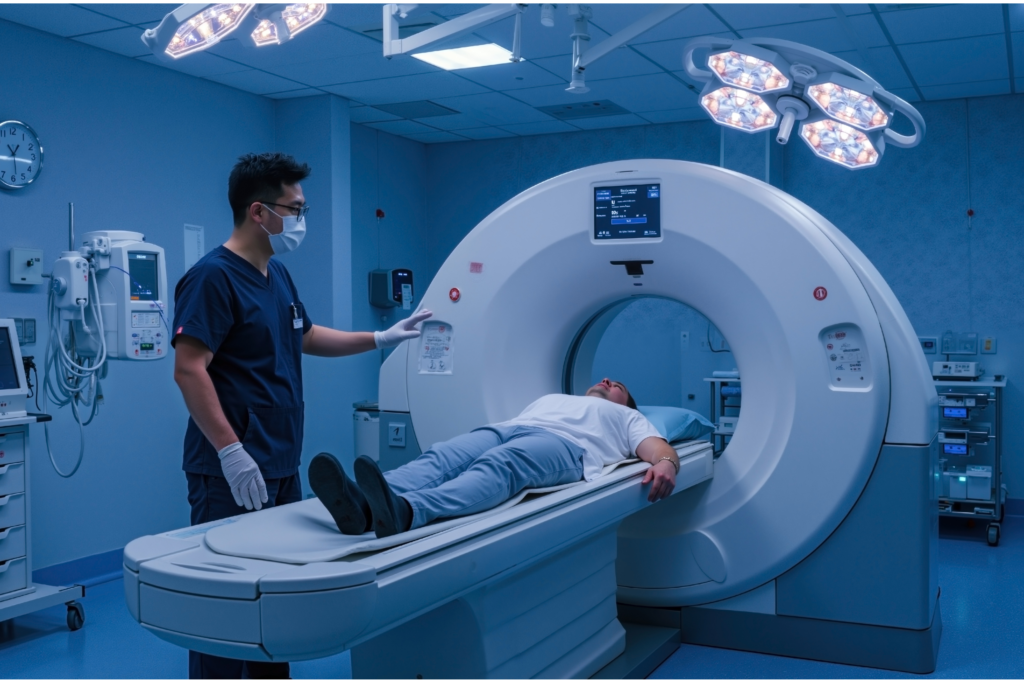
- Positioning: You’ll lie on a motorized table that slides into the MRI scanner.
- Imaging: The MRI creates detailed images of the brain. These images are then reviewed by the radiologist and may be processed with icobrain ARIA software.
- AI-Assisted Analysis: icobrain DM helps evaluate brain structures and measure brain volume changes to support standardized dementia assessment and monitoring.
- Stay Still: It is important to remain still during the scan so the images are clear.
- Noise: The MRI machine makes loud tapping or thumping sounds. Earplugs or headphones may be provided.
- Duration: The scan usually takes about 30–60 minutes, depending on the protocol.
What to Expect?
- Comfort: The procedure is painless, but lying still may feel uncomfortable for some patients.
- Safety: MRI does not use ionizing radiation.
- Monitoring: This exam helps doctors monitor brain changes that may occur during Alzheimer’s therapy.
- Results: Your doctor and radiologist will review the MRI images and report the findings.
After the Scan
- Normal Activities: Most patients can return to normal activities immediately after the scan.
- Follow-Up: Your doctor will discuss the results and any next steps with you.
Common Uses of MRI icobrain DM
- Dementia Evaluation: Helps evaluate brain changes associated with dementia and cognitive decline.
- Alzheimer’s Disease Assessment: Helps support the assessment of brain changes associated with Alzheimer’s disease.
- Brain Volume Analysis: Helps measure brain structures and detect changes in brain volume over time.
- Follow-Up Comparison: Helps compare baseline and follow-up MRIs for monitoring progression and treatment response.
- Radiologist Support: Provides additional AI-assisted measurements and standardized reporting support.